
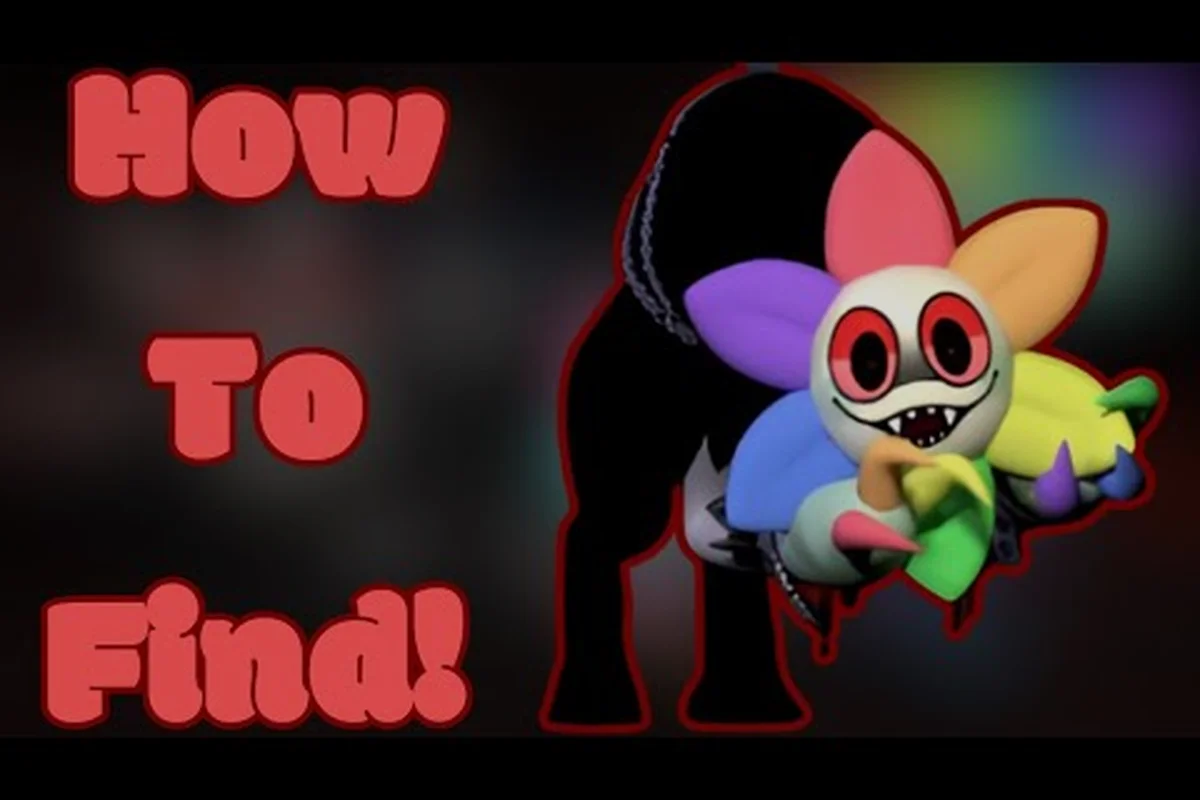
Knowing the the hollow night 2 monster matters because each regenerated maze introduces a different threat with unique behavior, turning the second night into a test of observation rather than memorization. The complete roster also shows how quickly the danger escalates through nights three to seven, when new movement patterns, hidden routes, and competing creatures make every chamber feel less forgiving.
The Hollow Night 2 Monster and the Full Roster
The Hollow event presents a new creature each night while the maze changes around it. Based on the rotation reported by the GamesRadar+ rotation guide, the second night features Twisted Dandy, while nights three through seven shift to Biter, The Deer, Hiachi, Mimic, and The Inspector.
Understanding this sequence helps players recognize which source game inspired each enemy and what kind of pursuit they should expect. It also prevents a common mistake: treating a later enemy like an earlier one rather than adjusting movement, hiding, and clue-search priorities when the daily threat changes.
| Night | Monster | Source game | Core threat emphasized by reports |
|---|---|---|---|
| 1 | Seek | DOORS | Early chase pressure in a newly generated maze |
| 2 | Twisted Dandy | Dandy’s World | Relentless pursuit of the player |
| 3 | Biter | Demonology | The Hollow night 3 monster adds a new pursuer to the rotation |
| 4 | The Deer | 99 Nights in the Forest | A different threat profile on the fourth night |
| 5 | Hiachi | The Mimic | A new creature arrives when the maze regenerates |
| 6 | Mimic | Animal Hospital | The Hollow night 6 monster replaces the previous pursuer |
| 7 | The Inspector | Scary Shawarma Kiosk | The seventh-night challenge continues the escalation |
The event reportedly lasts nine days, with a new monster featured each day. Eurogamer’s overview of the event notes that players search for clues while avoiding the creature, and that the scare level rises as the rotation continues. The important principle is simple: every night is a separate survival test, even though the objective of finding clues remains consistent.
Reading the Daily Rotation
The rotation is the clearest framework for understanding the event. Players who know that Twisted Dandy occupies night two can avoid confusing him with Biter, The Deer, or the later Mimic. Those later enemies receive their own names and source games in the daily schedule, so each deserves a separate response.
| Rotation fact | Practical meaning |
|---|---|
| A different monster appears each day | Yesterday’s escape strategy may not transfer directly |
| The maze regenerates nightly | Memorized routes and dead ends become less dependable |
| Clue searching continues during encounters | Standing still is rarely the best plan |
| Scare levels reportedly increase | Remaining alert matters more as the event advances |
| The roster contains nine featured creatures | Nights eight and nine follow the same progression pattern |
The names in the schedule are useful, but the monsters’ source games matter as well. A creature imported from Dandy’s World should not be analyzed with assumptions borrowed from a DOORS-inspired chase, and players should not treat an enemy from Animal Hospital like a pursuer from Demonology. Source identity provides context, while actual behavior in the current maze remains the more reliable evidence.
For broader information about the remaining entries, including the night one and late-night opponents, see The Hollow’s Overseer and daily monster overview. The complete pattern across the event is easier to understand when the first, second, and final nights are viewed as separate stages rather than one continuous encounter.
Twisted Dandy: The Hollow Night 2 Monster Profile
The Hollow night 2 monster is Twisted Dandy, the creature imported from Dandy’s World. Reported by both GamesRadar and Eurogamer, Twisted Dandy occupies the second slot in the daily sequence. His placement immediately after Seek establishes the first major escalation: the first night introduces the event’s pursuit loop, and the second removes any remaining assumption that the maze is a controlled introduction.
Twisted Dandy’s most important characteristic is his relentless pursuit. That makes distance management more valuable than a brief hiding attempt. Players should move when the creature closes in, use turns to break the line of sight, and continue collecting clues whenever they have a safe opening. A static strategy that works against a less aggressive enemy can become dangerous when the hunter is designed to keep pressure on the player.
Twisted Dandy Survival Checklist
A reliable response to Twisted Dandy on the second night requires several connected decisions rather than one universal trick. In The Hollow: Night 2, his pursuit can turn a single hiding place into a dead end if the player treats one maze segment as permanent. The practical approach is to read Twisted Dandy’s second-night rotation slot and Dandy’s World origin, then use the night’s changing maze layout to preserve multiple escape routes before committing to a clue route.
- Identify the enemy by its second-night rotation slot and Dandy’s World origin
- Keep moving when Twisted Dandy approaches instead of standing in one hiding place
- Use corners and turns to interrupt his route through the maze
- Collect clues only when nearby movement is unlikely to expose your position
- Remember that the regenerated layout can invalidate the previous night’s route
- Treat every chase as temporary unless the player has reached a confirmed safe point
This checklist is deliberately tied to the night two matchup. It does not assume the exact attack range, sound cue, or animation shared by every enemy, because the supplied event information does not verify those values. Instead, it focuses on the verified concept of pursuit and the physical behavior of a nightly maze where routes can change.
Why Night Two Feels Sharper
Night two is often more threatening than night one because the event has already established its rules, yet the creature is no longer the introductory threat. Players may be tempted to explore more aggressively after surviving Seek, but Twisted Dandy’s pursuit style rewards continuous route planning. The maze can still be searched for clues; the mistake is treating exploration and evasion as separate phases rather than simultaneous tasks.
| Situation | Riskier response | Better response |
|---|---|---|
| The enemy is approaching directly | Staying in place to gather one more clue | Create distance first, then return to the objective |
| A corridor offers only one turn | Moving straight through without checking ahead | Use the turn to change direction and break pursuit |
| A route worked the previous night | Repeating it automatically | Reassess because the maze regenerates |
| The player feels cornered | Making rapid, unpredictable turns in the same small area | Find a longer route or a different branch |
| The enemy leaves the immediate area | Remaining exposed in the same corridor | Move to a new section while the pressure is reduced |
These recommendations are based on the verified description of Twisted Dandy as a pursuer and the event’s regenerated-maze structure. Exact movement speed, collision size, and visual warning windows may vary by version, so players should treat community descriptions as useful guidance rather than fixed engine values.
Nights Three and Four: Biter and The Deer
The Hollow night 3 monster is Biter, drawn from Demonology, according to the reported daily rotation. This change is not merely a new name on the schedule. The player is now moving from Twisted Dandy’s straightforward pursuit into a third-night test with a different character identity, while the maze is regenerated again and the reported scare level continues to rise.
Biter’s key strategic value comes from comparison. If a player understood Twisted Dandy through constant movement, they should not automatically assume the same rhythm remains ideal. The better lesson is to identify the active enemy, observe how it closes distance, and adjust route choice without stopping progress on clue collection. Later entries in The Hollow’s monster pattern reference can provide a useful frame for comparing pursuit behavior across the event.
| Comparison point | Twisted Dandy | Biter | What to carry forward |
|---|---|---|---|
| Night | 2 | 3 | Earlier experience is preparation, not a guaranteed solution |
| Source | Dandy’s World | Demonology | Each import has its own visual and behavioral identity |
| Verified design cue | Relentless pursuit | New roster threat with escalating scare level | Observe rather than assume |
| Maze state | Regenerated | Regenerated again | Recheck routes in every nightly run |
| Best transferable skill | Breaking line of sight | Adjusting to a different chase rhythm | Stay mobile without ignoring objectives |
The Hollow night 4 monster is The Deer from 99 Nights in the Forest. Its arrival creates another clear break in the progression: the event has moved beyond its first three featured creatures, and the player must preserve clue-search discipline while adapting to a fourth opponent. The supplied reporting does not provide a verified attack table, exact speed, or fixed spawn location for The Deer, so the most responsible strategy is based on the confirmed daily structure rather than invented precision.
What Changes After Night Two
The main lesson after Twisted Dandy is that adaptability becomes more important than memorization. A route can be efficient, but a regenerated maze makes geometry less dependable. A previous enemy can inform general awareness, yet a new import requires observation. Players should keep their attention on sounds, turns, nearby openings, and unfinished objectives without turning the entire experience into a blind sprint.
That balance matters because the event reportedly requires both clue search and evasion. Simply avoiding the monster does not necessarily complete the nightly objective, while repeatedly stopping to collect clues can leave too little room to react. A workable pattern is to plan a short search window, listen for environmental changes, move before the enemy reaches the area, and then return to the clue route if conditions allow.
Nights Five Through Seven: Hiachi, Mimic, and The Inspector
The Hollow night 5 monster is Hiachi from The Mimic. The third listed source game in the sequence reinforces a central feature of the event: The Hollow assembles its challenge from several distinct game identities. Hiachi’s fifth-night appearance therefore gives players another reason to separate what they observe in the maze from memories of the original game.
The Hollow night 6 monster is Mimic from Animal Hospital, while the Hollow night 7 monster is The Inspector from Scary Shawarma Kiosk. These are not alternate labels for one enemy. Each occupies a separate nightly slot, appears after the maze regenerates, and contributes to the event’s rising difficulty. The verified data supports the roster, dates, and source games; it does not establish a shared attack pattern for all three opponents.
| Night | Monster | Source game | Shift in the event |
|---|---|---|---|
| 5 | Hiachi | The Mimic | The rotation enters its final three featured nights |
| 6 | Mimic | Animal Hospital | A new pursuer replaces the previous night’s creature |
| 7 | The Inspector | Scary Shawarma Kiosk | Players face the seventh-night threat before the last two entries |
Hiachi on Night Five
Night five is a midpoint rather than a rest area. Hiachi replaces Biter and The Deer, and the maze changes again. Players who learned to expect pursuit can still use that knowledge, but they should not predict every movement choice from the previous night. The practical response is to watch how Hiachi uses corridors, whether it changes direction after a turn, and how much space it leaves between its position and the player.
That observation is especially valuable because later opponents arrive quickly. Hiachi’s night gives players a chance to compare a new source-game character with Twisted Dandy and Biter before reaching the final stretch. The useful takeaway is a repeatable process: identify the creature, note its approach, secure a nearby clue when possible, and choose a route with more than one exit.
Mimic on Night Six
Mimic’s sixth-night placement raises the importance of consistent route discipline. By this stage, players know the event’s structure, but routine can create overconfidence. The maze regeneration means a familiar branch may open into a dead end, while a previously unused passage may now provide the only escape. The monster identity changes too, so the player should respond to what happens rather than relying on a fixed night-by-night script.
The Hollow night 6 monster can be approached with three priorities: keep the objective in view, avoid isolated corners, and leave alternate exits available. These are practical survival rules rather than claims about Mimic’s exact abilities. They also apply well to the maze’s reported structure, where finding clues and evading a creature occur at the same time.
The Inspector on Night Seven
The Inspector becomes the Hollow night 7 monster, represented as coming from Scary Shawarma Kiosk. This is the last featured threat in the seven-night table and comes immediately before the event’s two remaining days. Its position makes it useful for players preparing for the full nine-day schedule, although the actual nights eight and nine bring different enemies.
The best preparation is to stop organizing the event around one creature. Learn the general survival loop, then change the specific response for each new opponent. By The Inspector’s night, a player should know how to manage clue objectives, identify safe turns, recognize a lost advantage, and re-enter the maze without camping in one location.
A Practical Seven-Night Survival Plan
A structured plan prevents one successful night from creating bad habits on the next. The following sequence uses the reported night-two monster and the changes from nights three through seven. It emphasizes decisions that remain valid even when the enemy’s detailed behavior changes.
Before the Night Begins
Before entering, identify tonight’s monster and source game. The schedule functions as a preparation tool, not merely a reference label. Knowing that Twisted Dandy is the second-night opponent lets the player prepare for pursuit; knowing that Biter follows means the player can enter night three without assuming the previous enemy’s exact behavior.
| Preparation step | Reason it matters | Concrete action |
|---|---|---|
| Check the active night | Enemy identity changes daily | Write down the night number and monster |
| Review the source game | Visual cues may differ from prior nights | Note distinctive appearance or movement |
| Set a clue objective | Exploration and evasion overlap | Choose one reachable clue target at a time |
| Identify alternate exits | Corners are dangerous in any chase | Avoid routes with only one branch |
| Accept route changes | The maze regenerates | Memorize landmarks, not the complete layout |
During the Chase
Maintain a rhythm of movement, listening, and short objective checks. When the enemy is distant, advance toward a clue. When the threat closes in, use corners and branching paths to regain space. When the enemy appears to lose pursuit, relocate instead of remaining at the same hiding point. This approach remains useful from Twisted Dandy through The Inspector because the nightly structure always combines searching with evasion.
A practical chase routine against the Hollow Night 2 monster can be divided into four phases, each tied to a specific shift, map, and escalation of danger. In the Twisted Dandy and The Inspector stages, prioritize clue paths that reduce backtracking, because a wrong turn can expose you to the monster near a wall or junction. The same search-and-evasion pattern continues through later nights, but routes should be adjusted as the Hollow Night 2 monster’s pursuit behavior changes; the supplied sources do not establish exact spawn ranges, pursuit speeds, or stun timings, so avoid treating unconfirmed timings as fixed rules.
-
Identify: Confirm the monster’s position and the route it is taking.
-
Create space: Use a turn or a junction to add distance.
-
Reorient: Move toward a clue or safer section when the path opens.
-
Reset: Do not repeat the same spot if the enemy returns.
These phases are deliberately flexible. The supplied sources do not confirm universal stun windows, safe rooms, or specific hiding mechanics, so the plan avoids presenting speculation as fact. If future updates add or change features, players may need to adapt the routine while retaining the core sequence.
Comparing Difficulty Across the Week
The reported scare-level increase makes later nights more demanding, but a simple monster ranking would overstate what the data proves. We can confidently say that the roster changes, the maze regenerates, and nights five through seven contain unfamiliar creatures. We cannot responsibly assign exact threat scores to Twisted Dandy, Biter, The Deer, Hiachi, Mimic, or The Inspector without verified mechanical data.
| Risk factor | Early rotation | Later rotation | Player response |
|---|---|---|---|
| Enemy familiarity | Seek then Twisted Dandy establish the baseline | Five new monsters replace the early threats | Spend less time assuming continuity |
| Maze knowledge | Routes may seem familiar from night one | Repeated regeneration weakens route memorization | Learn landmarks and exits |
| Event pressure | Scare level is lower on early nights | Scare level reportedly increases | Balance clues and evasion earlier |
| Available experience | Limited baseline knowledge | Several completed nights of practice | Use repeatable procedures, not fixed reactions |
Players seeking a location-focused comparison can consult The Hollow monster locations overview. However, location claims should be checked against the current version because a regenerated maze and a balance update can alter where encounters occur.
Verified Facts, Community Reports, and Unknowns
The event roster is supported by media reporting and community references, but not every gameplay detail has the same level of confidence. GamesRadar and Eurogamer both identify the multi-night structure, the changing maze, the clue-search objective, and Twisted Dandy as the second creature. Community data adds background on the nine featured monsters and their source games, although it may lag official changes.
The the Fandom community wiki entry is useful for cross-checking source-game identities, but it should remain a secondary reference. The core facts used here are intentionally limited: the daily rotation, Twisted Dandy on night two, Biter on night three, The Deer on night four, Hiachi on night five, Mimic on night six, and The Inspector on night seven.
| Claim type | Confidence | Reason |
|---|---|---|
| Twisted Dandy is the night-two monster | High | Corroborated by two media reports |
| Biter, The Deer, Hiachi, Mimic, and The Inspector follow | High | Listed in the reported daily rotation |
| The maze regenerates each night | High | Corroborated by the event overview |
| The player searches for clues while evading the creature | High | Core loop described by media coverage |
| Scare levels rise as days pass | High | Reported in the event overview |
| Exact attack range, speed, and stun timing | Unverified here | No reliable numerical details in the supplied sources |
| Fixed spawn points across all nights | Unverified | Regeneration and version changes make static claims risky |
This distinction is practical rather than academic. Players can use the roster to prepare while still watching the actual encounter. If a patch changes speed, attack timing, or maze behavior, a confident but outdated guide becomes less useful than a method built around observation and repeatable decision-making.
Community reports are most useful for filling observations that media summaries omit. Players can record which turns provide the best escape, how long the enemy remains alert, and whether route changes occur at consistent intervals. Those reports should be treated as a testing log, however, rather than exact specifications, and they should be compared with the current live behavior before being generalized.
Key Takeaways for Days Two Through Seven
The most important takeaway is that The Hollow is organized around changing nights, not one permanent enemy. The Hollow night 2 monster is Twisted Dandy, the day-two threat imported from Dandy’s World. His reported pursuit behavior makes movement and route control essential, but players still need to collect clues instead of simply fleeing forever.
From there, the roster continues with Biter, The Deer, Hiachi, Mimic, and The Inspector. The Hollow night 3 monster begins the shift away from the opening encounter, while the Hollow night 4 monster and Hollow night 5 monster reinforce the need to learn each new opponent. On later nights, the Hollow night 6 monster and Hollow night 7 monster complete the seven-night sequence covered here.
The winning approach is therefore prepare with the schedule, decide with the maze, and adapt to the creature. Confirm the active monster, collect a clue when conditions permit, maintain alternate routes, and use corners to create distance. That routine will not erase the difficulty of the later nights, but it gives players a repeatable way to face Twisted Dandy and every creature that follows.
Frequently Asked Questions
Who is the The Hollow night 2 monster?
The The Hollow night 2 monster is Twisted Dandy, a creature imported from Dandy’s World. Media-reported rotation information places Twisted Dandy directly after Seek on the first night. His defining trait is persistent pursuit, so moving, changing routes, and breaking direct approaches matter more than holding one position.
What is the The Hollow night 3 monster?
The The Hollow night 3 monster is Biter, which comes from Demonology. It follows Twisted Dandy in the reported nine-day event rotation. Because the maze regenerates and the scare level rises, players should retain general chase awareness while avoiding assumptions about exact movement or attack timing.
Which monster appears on The Hollow night 4?
The Hollow night 4 monster is The Deer, imported from 99 Nights in the Forest. It replaces Biter after the maze regenerates for another night. The safest transferable strategy is to remain alert around junctions, keep alternate exits available, and observe the creature’s behavior rather than transferring a fixed Twisted Dandy routine.
Are the night 5 through night 7 monsters different enemies?
Yes. The Hollow night 5 monster is Hiachi from The Mimic, the Hollow night 6 monster is Mimic from Animal Hospital, and the Hollow night 7 monster is The Inspector from Scary Shawarma Kiosk. Each occupies a separate rotation slot, so the schedule and the current in-game behavior should both guide preparation.
Does the maze change between nights in The Hollow?
Reported event coverage indicates that the maze regenerates as a new monster appears. This makes memorized routes unreliable, especially across later nights. Players should remember landmarks and branching options instead of following an identical path, then collect clues in short bursts while continuing to watch for pursuit.