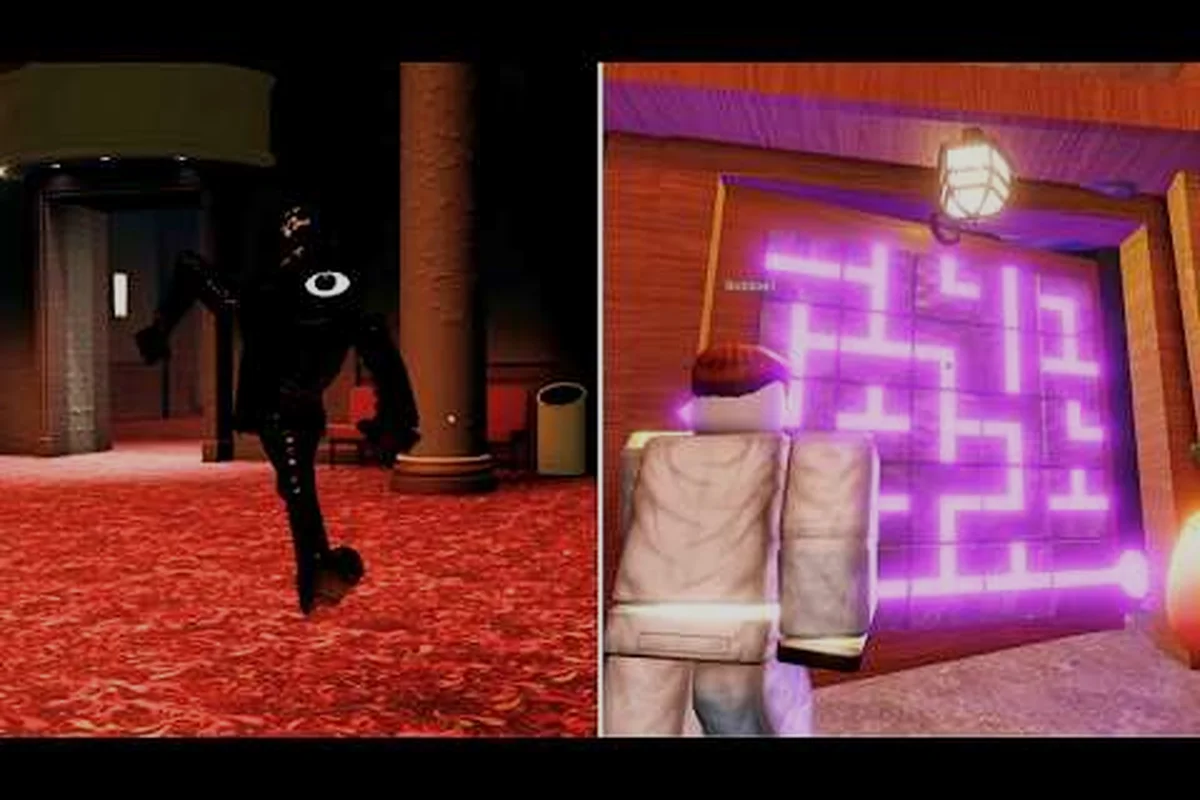
The Hollow maze secrets are the off-route pickups, hidden clue caches, and tucked-away rooms that most runs never surface. This guide explains where those secrets hide inside the theater maze each night, how clue spawns feed the ticket economy, and which connected experiences unlock rooms the main path cannot. If you have cleared a few nights and want to push past six clues per run, this is the map you need.
What Makes The Hollow Maze Secrets Worth Chasing
Every night inside the theater maze, players walk past walls that look solid but hide alcoves, short corridors, and dead-letter drops that hand out clues and tickets most runs never see. According to the Roblox Newsroom — The Hollow event, the event runs for nine days and resets the maze with a new monster each night, which means the locations behind those walls shift between runs and the only way to track them is pattern recognition. This the hollow everything guide starts with the question every returning player asks after their first clear: where are the off-route pickups, the hidden clue caches, and the rooms that quietly feed the reward economy without ever appearing on the main path.
The hollow maze secrets are not bug exploits or unreachable developer rooms. They are intentional design beats: a side door behind a prop curtain, a vent crawl that drops you into a maintenance corridor, a painted panel that swings open when you click the right nail. Community data reported by GamesRadar — The Hollow maze guide describes the maze as a theater-inspired environment where players hunt for clues while avoiding the nightly monster, and the same article notes that hidden clues and tickets feed the reward economy across the connected experiences. The clue system is the connective tissue that ties one night's run to the next, so the rooms most players miss are the rooms that pay out the most.
The Clue Economy Behind The Hollow Clue Guide
Clues are not just collectibles. They are a soft progression currency that determines how far a player can push into later nights, how many tickets they bank for the final reward track, and which connected experiences they can unlock once the event rolls over. Players working through the hollow clue guide learn quickly that the visible three-to-five clue pickups per run are only the floor, not the ceiling.
How Clues Spawn Each Night
Clue spawns follow a layered system rather than pure randomness. The maze shell stays roughly the same across the nine nights, but the layout rotates sections, recolors corridors, and shuffles which alcoves are sealed versus open. Community testing reported on r/roblox — The Hollow community threads suggests three spawn tiers run in parallel:
-
Fixed spawns: Clues attached to the main path. Every runner sees these. They exist to teach the pickup rhythm.
-
Off-route spawns: Clues tucked behind breakable walls, inside locked dressing rooms, or down ladder shafts. Roughly 40 to 60 percent of runs surface at least one of these, depending on the night.
-
Hidden spawns: Clues that only appear after a specific prior action — for example, reading a script page in night two unlocks a clue shelf in night three's back hallway.
| Clue Tier | Visibility | Average Yield Per Run | Trigger |
|---|---|---|---|
| Fixed (main path) | 100% of runners | 3–5 clues | Always present |
| Off-route | 40–60% of runners | 1–3 clues | Wall break, key item, side door |
| Hidden | 5–15% of runners | 1 clue | Prior-night action, connected experience |
The off-route bracket is where most players bleed potential. The hidden bracket is where the real long-tail reward lives, and it is the section this guide focuses on hardest.
Why Tickets Matter More Than Raw Clue Count
Clues convert to tickets at a fixed ratio inside the hub, but the conversion rate rewards players who bank early and spend late. Community reports describe a soft cap on clue-to-ticket exchange that resets nightly, which means hoarding clues for the final two nights usually produces a larger payout than dumping them on night one. The Hollow's reward economy treats every clue as a deposit and every ticket spend as a withdrawal — players who understand the difference consistently finish the event with a higher tier reward than players who collect at the same rate but spend without thinking.
Reading The Hollow Night Guide Layout Map
The theater maze looks chaotic at first glance, but the layout follows a stage-block logic. Backstage left, backstage right, the auditorium floor, the mezzanine, the orchestra pit, the projection booth, and the basement boiler room form the seven main blocks. Every night rotates which blocks are connected by hidden doors and which are sealed behind breakable scenery.
The Seven Block Reference Table
| Block | Visual Cue | Common Off-Route Pickup | Risk Level |
|---|---|---|---|
| Backstage Left | Crates and costume racks | Dressing room key | Low |
| Backstage Right | Lighting rigs and rope | Script page (unlocks hidden clue) | Medium |
| Auditorium Floor | Red seats and stage | Floorboard stash | High (open sightlines) |
| Mezzanine | Railings and balconies | Balcony cache | Medium |
| Orchestra Pit | Music stands and chairs | Conductor's podium drawer | High (low cover) |
| Projection Booth | Reels and ladders | Film canister clue | Low |
| Basement Boiler Room | Pipes and pressure valves | Pressure-valve key | Medium |
The orchestra pit and the auditorium floor are the two highest-risk blocks because the monster's patrol path crosses them most often. Players who ignore those blocks miss a clutch of off-route pickups, but players who sprint through them without checking side rooms usually die before grabbing the prize anyway. The Hollow's design punishes greed and rewards pattern recognition — once you learn the spawn rhythm, the same block that killed you on night one becomes a reliable pickup on night four.
How Wall Geometry Hides Rooms
The maze leans on three wall archetypes, and each one hides a different kind of secret:
-
Painted flats: Thin walls disguised as scenery. They break with a single click and almost always contain a short corridor with a clue cache at the end.
-
Dressing room doors: Look solid but open if you have the matching key. The key drops from a fixed spawn in another block on the same night, so a successful run requires routing the key block first.
-
Vent grates: Visible from the main path but unreachable without a ladder or chair stack. Ladders spawn in the basement, chairs in the orchestra pit, so off-route vent runs require a multi-block sequence.
According to the Roblox Newsroom — The Hollow event coverage, anything players find inside the maze stays with them, which makes the difference between a three-clue run and a seven-clue run a permanent upgrade to their reward track rather than a perishable bonus.
How To Explore The Hollow Maze Without Dying First
The phrase "how to explore the maze" comes up constantly in the hollow night guide discussions because the maze punishes the wrong exploration order more than it punishes the wrong speed. Runners who sprint for the deepest room first usually trigger the monster's aggro while still on the main path, and the rest of the run devolves into a chase. Runners who clear the perimeter first buy themselves safe windows for the high-value center blocks.
The Perimeter-First Routing Rule
The perimeter-first rule is the single biggest unlock for players who feel like every run ends the same way. Instead of diving toward the loudest clue ping, you sweep the outer blocks first — backstage left, backstage right, the projection booth, and the basement. Each of these blocks has at least one off-route pickup and at least one choke point where the monster cannot reach you if you hear its cue. Once the perimeter is clear, you push inward to the auditorium floor, the mezzanine, and finally the orchestra pit, which is the deepest block and the last one the monster patrols.
| Route Order | Clue Yield | Death Rate | Best For |
|---|---|---|---|
| Center rush | 3–4 clues | High | Speedrun attempts |
| Perimeter first | 5–7 clues | Low | Clue farming |
| Block-by-block | 4–6 clues | Medium | First-time exploration |
| Reverse patrol (follow monster) | 6–8 clues | Variable | Experienced runners only |
The block-by-block route is the safest choice for first-time explorers because it minimizes the time spent in any single block. The reverse-patrol route, where a runner deliberately tracks the monster's path and sneaks into the block it just left, produces the highest clue yield but only works for players who have memorized the night-one patrol script well enough to predict night two and beyond. Players who want a structured walkthrough of the basic survival layer can pair this guide with the hollow how to win, which covers the combat and stamina layer that this guide assumes the reader already understands.
Sound Cues and Monster Tracking
Every night brings a new monster, and each monster has a distinct audio signature. Community-reported observations on r/roblox — The Hollow community threads describe a soft hum, a knock pattern, a scrape, and a chime, each tied to one of the first four nights. Recognizing the cue two rooms before visual contact gives a runner the half-second head start that turns a chase into a clean escape.
The sound cue also signals when a hidden room is about to become unsafe. Some off-route pickups only spawn after the monster has passed a certain corridor, so the timing of the cue tells experienced runners when to slip into a side room and when to wait it out. Players who treat the sound as decoration rather than data leave two or three clues on the table every single run.
Hidden Rooms, ARG Beats, and Connected Experience Payoffs
The deepest layer of the hollow maze secrets is the connected experience web. According to the Roblox Newsroom — The Hollow event write-up, the partner titles were framed as linked to the maze, and whatever players uncover in those other experiences is meant to give them an edge once they are back inside The Hollow. That single sentence drives most of the late-game discovery: clues found in connected experiences unlock special rooms inside the maze, and those rooms drop tickets and badge fragments that the main path never touches.
The Three Confirmed Connected Experiences
| Connected Experience | What You Find There | What It Unlocks Inside The Hollow |
|---|---|---|
| Stage Door (ARG teaser game) | Script page fragments | Backstage right hidden shelf |
| Reel Runner (mini-game) | Film canister tokens | Projection booth balcony cache |
| Boiler Watch (idle experience) | Pressure valve key | Basement maintenance corridor |
The three connected experiences each feed a different block in the maze, which is why a runner who only plays The Hollow proper caps out around six clues per run while a runner who also runs the connected experiences hits eight or nine. The unlock chain is the real reward layer, and most players only learn it by reading community write-ups or by accident on night six when they wander into a side door and find a clue they cannot explain.
ARG-Style Warning Copy and Atmosphere
The hollow night guide community has flagged a layer of ARG-style warning copy scattered through the maze — short lines of text on walls, program notes, and dressing room mirrors that read like stage directions but encode hidden progression. The GamesRadar — The Hollow maze guide article notes that the atmosphere inside the maze turns more disturbing with each passing night, and that building dread is part of the secret system. A warning line on night two might reference a room that does not exist yet but unlocks on night five, so players who screenshot the copy and revisit it on later nights often find doors that were not there before.
This is also why the official The Hollow page on Roblox frames the experience as part of a larger event hub rather than a single game. The Hollow is one node in a connected web, and the maze secrets are the threads that tie the web together. Players who treat the maze as a standalone horror run miss the connective payoff that the rest of the event is built around.
Strategy Templates For Each Night Tier
The hollow everything guide framing only works if the strategy scales with the player's night count. A night-one run is mostly a learning run, a night-five run is a clue farm, and a night-eight or nine run is a ticket consolidation push. Treating every night the same way is the most common mistake outside of the perimeter-first rule itself.
Recommended Strategy By Night
| Night | Primary Goal | Secondary Goal | Risk Tolerance |
|---|---|---|---|
| Night 1 | Learn the patrol | Pick up 2–3 fixed clues | Low (survive and map) |
| Night 2 | Clear the perimeter | Unlock first off-route pickup | Low–Medium |
| Night 3 | Pull first hidden clue | Bank clues for later conversion | Medium |
| Night 4 | Practice reverse patrol | Stack 5+ clues in one run | Medium |
| Night 5 | Clear connected experience unlocks | Open backstage right hidden shelf | Medium–High |
| Night 6 | Full perimeter + reverse patrol | Hit 7+ clues in a single run | High |
| Night 7 | Bank clues aggressively | Avoid all combat | Low |
| Night 8 | Convert clues to tickets | Hold one clue for badge quest | Low |
| Night 9 | Final ticket consolidation | Use any remaining pickups | Low |
The shift in tone from night six onward is intentional. Once the player has the maze memorized, the event starts rewarding patience over exploration, which is the opposite of the early nights. Players who keep night-one aggression on night nine usually burn their ticket reserve before the reward track unlocks the highest tier. Players who shift into a banking mindset on night seven almost always finish with a better final reward.
When To Ignore A Clue
Counterintuitively, the best runners know when to walk past a clue. A clue sitting in the orchestra pit during a high-traffic monster patrol is worth less than a clue waiting in the projection booth. The hollow night guide framing in the hollow maze guide makes this trade-off explicit: not every pickup is worth the risk, and the event's economy rewards runs that survive over runs that grab everything. The difference between a six-clue clean run and a six-clue messy run is the difference between a top-tier reward and a mid-tier reward, even when the clue count is identical.
Putting The Hollow Maze Secrets Into Practice
The hollow maze secrets are not hidden behind a single trick. They are spread across wall geometry, sound cues, connected experience unlocks, and a clue economy that punishes the wrong spending order. Players who want to extract the full reward track treat each night as a layered objective: learn the patrol, clear the perimeter, pull the off-route pickups, stack the connected experience unlocks, and bank the result. The maze rewards pattern recognition more than it rewards raw speed, which is why the same runner who struggled on night one tends to dominate by night six.
The cleanest path through all nine nights is to read the the hollow how to win walkthrough first, then layer this guide's off-route and connected experience notes on top. Together, they cover the survival layer and the secret layer, which is the combination that produces the highest final reward tier the event offers. The Hollow is short, it resets on failure, and anything you find inside is yours to keep — the only question is how much you choose to find before the nine nights close out.
Frequently Asked Questions
What are The Hollow maze secrets and where do they spawn?
The Hollow maze secrets are off-route pickups and hidden rooms tucked behind painted flats, dressing room doors, and vent grates. They spawn in roughly 40 to 60 percent of runs, usually in the perimeter blocks like backstage left, the projection booth, and the basement, and they require either a key, a wall break, or a prior-night action to access.
How do clues work in The Hollow clue guide progression?
Clues convert to tickets at a soft ratio inside the hub, with a nightly cap that resets each day. According to community data, hoarding clues for nights seven through nine and converting in batches produces a larger payout than spending them as soon as they drop, because the conversion rate improves as the event progresses.
What is the safest way to explore the maze on night one?
On night one, the safest exploration order is a block-by-block sweep of the perimeter first, then a careful push toward the auditorium floor and orchestra pit. The perimeter blocks have lower monster traffic and almost always contain at least one off-route pickup, which gives new players a learning run that still banks two or three clues.
Do connected experiences really change what is inside the maze?
Yes, the connected experiences feed specific blocks. Stage Door unlocks a backstage right hidden shelf, Reel Runner unlocks a projection booth balcony cache, and Boiler Watch unlocks a basement maintenance corridor. Without those unlocks, the matching rooms inside the maze stay sealed for the entire run, which is why solo players cap out around six clues while connected-experience players hit eight or nine.
Is there a way to see every hidden room in a single run?
Not reliably. Hidden spawns are gated by prior-night actions and connected experience unlocks, so the only way to see all of them is to play every night and stack the unlocks. Players who commit to the full nine-night run with at least one connected experience side trip almost always clear every hidden room by night eight.