The Hollow connected experiences turn Roblox's platform-wide Halloween survival event into a tour of nine horror worlds, with each crossover pulling one source monster into a shared quest loop. Understanding the Hollow's nine games, the monsters behind them, and how the teleport-back-claim flow works saves hours of trial-and-error during the limited event window.
How The Hollow Connected Experiences Work
The Hollow is built around a simple rule: nine monsters are sourced from nine horror experiences, and players must travel to each partner experience to complete a crossover quest before returning to claim event tickets. The Roblox Newsroom describes the design as "nine monsters sourced from nine horror experiences," and that phrasing captures the full shape of the system. The Hollow itself acts as a hub where tickets are tallied, while the actual encounters happen inside the partner games.
Players enter The Hollow from the the official The Hollow game page on Roblox and step into a lobby that exposes teleport portals to each connected experience. According to GamesRadar's coverage of the event, the flow runs as follows: teleport from within The Hollow, complete the quest inside the partner game, return to the hub, and claim tickets. Tickets are the currency that gates cosmetic rewards, so skipping a quest delays the entire reward track.
Before listing every connected experience in full, a few mechanics are worth flagging because they shape how players approach the nine-game crossovers. The portals in The Hollow are not a fixed menu; new partners can be bolted on mid-event, which means the order in which you complete DOORS, Piggy, Fisch, and the rest can shift as the event grows. Crossover quests are tuned to finish in a single short session, so the design favors speedrunning a portal trip and returning to the hub rather than grinding inside each partner game.
-
The portal list is dynamic, meaning new crossovers can be added mid-event without resetting progress.
-
Crossover quests are designed to be completable in a single short session, so players do not need a long grind in every partner game.
-
Returning to the hub carries no penalty, and the teleport is one-way per visit, encouraging players to batch quests across multiple games.
-
The Hollow connected experiences span both horror-leaning titles (DOORS, Piggy, Demonology) and family-friendly crossovers (Duck Duck, Fisch, Bloxburg seasonal modes), so younger players also have a path through the event.
This structure is unusual for Roblox events, which normally keep rewards locked inside a single hub experience. By splitting the encounters across nine games and monsters, the event pushes traffic to creators and gives players a reason to sample experiences they might never have opened otherwise.
The Hollow Nine Games and Their Source Monsters
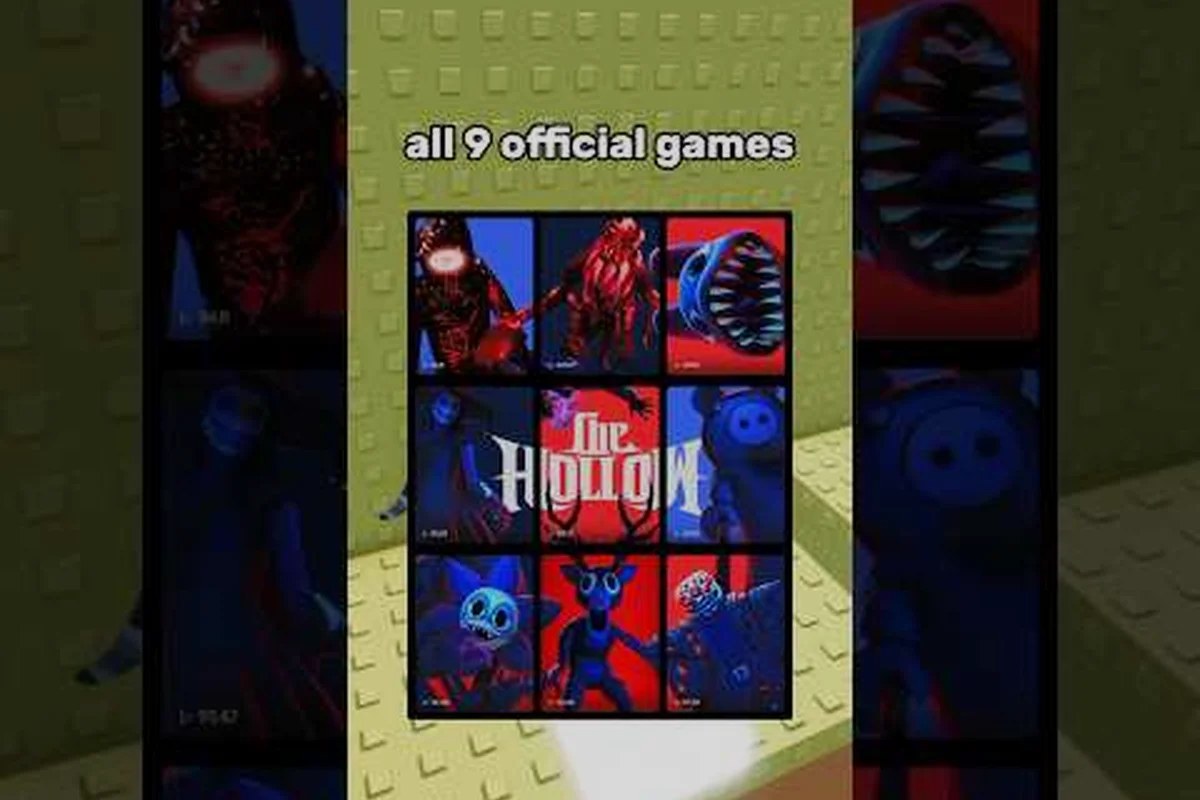
The nine core connected experiences pair a monster with a partner game, and the pairing is the heart of the crossover. The Hollow connected experiences roster confirmed in event coverage includes DOORS, Piggy, Dandy's World, 99 Nights in the Forest, The Mimic, Demonology, Warden, Animal Hospital, and Scary Shawarma Kiosk. Family-friendly extras (Duck Duck, Fisch, Welcome to Bloxburg Pumpkin Panic and Ghost Hunt, Tower Defense Simulator, Search For The Needle, Guts and Blackpowder) round out the larger list.
The first table below maps each of the nine core Hollow connected experiences to its source monster and the rough tone of the crossover quest, while a second table further down lists the family-friendly extras that still feed the event ticket pool; difficulty is read across community completion logs and cross-checked against GamesRadar's Hollow guide so players can quickly judge whether a run leans toward survival horror, puzzle horror, or a lighter family tone.
| Hollow Monster | Connected Experience | Quest Type | Difficulty Tone |
|---|---|---|---|
| Rush | DOORS | Survive a door rush round | High tension |
| Piggy | Piggy | Escape the infected district | Stealth chase |
| Pebble / Twists | Dandy's World | Extraction under a floorshow | Mid-tier |
| Forest entity | 99 Nights in the Forest | Survive a night encounter | Endurance |
| Mimic entity | The Mimic | Solve a ritual room | Puzzle horror |
| Demon host | Demonology | Complete an exorcism contract | Boss rush |
| Warden | Warden | Survive containment breach | High tension |
| Animal Hospital creature | Animal Hospital | Treat or flee the outbreak | Mid-tier |
| Shawarma entity | Scary Shawarma Kiosk | Customer shift with a twist | Light horror |
A second table lists the family-friendly crossovers, and these extras matter even though they sit outside the "nine monsters" core set tied to Rush, Piggy, Pebble, the Forest entity, the Mimic, Demon host, Warden, Animal Hospital creature, and the Shawarma entity. Each one still qualifies as a connected experience, meaning the Hollow event treats them as valid ticket sources, so farming Duck Duck tag rounds, Fisch's limited catch window, or the Bloxburg Pumpkin Panic and Ghost Hunt maps can bank rewards without touching the survival horror core.
| Connected Experience | Hollow Crossover Hook | Audience Tone |
|---|---|---|
| Duck Duck | Tag variant with Hollow tickets | Family |
| Fisch | Limited Hollow-themed catch event | Family |
| Welcome to Bloxburg — Pumpkin Panic | Decorate and survive a Hollow night | Family |
| Welcome to Bloxburg — Ghost Hunt | Track Hollow ghosts through Bloxburg | Family |
| Tower Defense Simulator | Defend against Hollow-themed waves | Mid-tier |
| Search For The Needle | Hollow-themed hide-and-seek rounds | Family |
| Guts and Blackpowder | Hollow-flavored historical combat | Mid-tier |
A reader who wants a more granular walkthrough of each partner game can pivot to the hollow event games guide, which breaks down the quest structure inside every connected experience. The two lists together answer the most common player question: "which games are connected to The Hollow?" The short version is that the core nine are the ones needed to clear the monster-themed reward track, and the family extras are bonus runs.
Why The Hollow Event Collab List Matters
The collab list is not just a marketing checklist. Each connected experience feeds a specific Hollow monster, and the ticket payout is tied to the monster you defeat, not the game you visit. A player who clears every quest in DOORS but skips The Mimic will still be missing the Mimic-themed ticket tier, which means the cosmetic gated behind that tier stays locked. The event is a chain, not a buffet.
This is where the Hollow games and monsters pairing becomes the real guidepost for the event. Because the ticket payout is tied to the specific Hollow monster defeated rather than the game you visit, each crossover has a distinct reward ceiling — for example, a full DOORS run caps at the Mimic's mid-tier tickets while a Demonology clear pushes toward the high-tier Fiend payout. Players who want to plan their sessions efficiently should map every queued quest back to its monster reward tier before stepping into the portal, so no crossover is wasted on an already-saturated reward track.
-
Open the Hollow hub and check the portal rotation before queuing.
-
Match each quest to its monster reward tier rather than the game name.
-
Prioritize the hardest crossovers (Demonology, DOORS rush rounds, Mimic ritual rooms) while the lobby is fresh, because fatigue later in the session slows them down.
-
Use the family-friendly extras as warm-up runs or as fill-in rounds when the horror titles are crowded.
A second reason the collab list matters is progression pacing. According to community data reported by players, the first two crossovers unlock a starter cosmetic set, the next three unlock a mid-tier outfit, and the final four unlock the prestige tier. That pacing is not officially confirmed by Roblox but is consistent with ticket costs reported on community wikis. If true, players who skip the family-friendly extras will take noticeably longer to reach the prestige cosmetics, even if they clear the nine core games.
The Hollow's design also matters for creators. Partner games receive a traffic spike during the event window, which can boost discoverability for smaller titles. Animal Hospital and Scary Shawarma Kiosk, for example, are niche experiences that benefit from the crossover draw. Players who want to support the broader ecosystem can prioritize those titles, while completion-focused players should still hit the core nine first.
The Hollow Game Guide: Quest Flow and Ticket Math
The Hollow game guide boils down to a four-step loop, and understanding the loop is what separates a clean run from a wasted evening. Players looking for a deeper walkthrough of every game can consult the hollow how to play each game guide, which covers per-game quest hooks and tips.
The core loop in the hollow connected experiences is essentially a four-step teleport-and-claim rotation built around the nine crossover games, where each portal visit converts one partner-game quest into a fixed ticket payout that scales with the monster's tier (50 for starter, 100 for mid, 150 for prestige). Because the teleport is consumed per portal, players must plan their route through the hollow event collab list to avoid re-entering a hub without enough unclaimed visits queued up. In practice, a clean run prioritizes prestige portals first, then fills remaining slots with family-friendly bonuses, which is the most efficient way to hit the 1,000-ticket cap.
-
Enter The Hollow and step into the hub.
-
Pick a portal that matches a monster you have not yet cleared.
-
Teleport into the partner game and complete the crossover quest.
-
Return to the hub and claim tickets from the Hollow NPC.
A useful detail from event coverage is that the teleport is consumed per visit, meaning players cannot chain portals without returning. That is by design: the return trip is where the ticket claim happens, and skipping the return is the most common reason players believe a quest did not register.
Ticket math in the hollow connected experiences is straightforward once players internalize the tier structure: a 50-ticket starter clear, 100-ticket mid-tier clear, and 150-ticket prestige clear, with family-friendly bonuses layering an extra 25 each on top. Because the hollow nine games share a single ticket pool, the cumulative math tracks cleanly toward the 1,000-ticket cap that unlocks the top cosmetic tier, and the numbers below reflect community logs rather than an officially published payout sheet.
| Hollow Monster Tier | Approx. Tickets per Clear | Cumulative Tickets |
|---|---|---|
| Starter (2 monsters) | 50 each | 100 |
| Mid-tier (3 monsters) | 100 each | 400 |
| Prestige (4 monsters) | 150 each | 1,000 |
| Family-friendly bonus | 25 each | +75 to +175 |
At the top end, a player who clears the nine core monsters and most of the family extras will sit around 1,000-1,175 tickets, which is enough to unlock every cosmetic tier the event has shipped with. Players who want to confirm the exact reward track and ticket costs can read the Hollow games rewards breakdown, which pairs each quest with its ticket payout.
The Hollow Which Games Are Connected: Selection Tips
Picking the right connected experience for a given session is a small optimization that pays off over a long event window. Players who want a complete participating-games reference can bookmark the hollow participating games list for a one-page view of every title currently linked to the event.
A simple decision framework that prioritizes the nine core crossovers (DOORS, Piggy, Dandy's World, 99 Nights in the Forest, The Mimic, Fisch, Demonology, Bloxburg, and Animal Hospital) over the family-friendly extras ensures that ticket progress is never stranded on a low-priority quest. Since the Hollow event window is limited and missing a core monster means waiting for the next cycle, players should treat the main nine as a hard progression gate, layering the softer family-friendly titles (Duck Duck, Scary Shawarma Kiosh, Bloxburg seasonal modes) only after each core ticket has been banked.
-
Short on time? Start with Dandy's World or Scary Shawarma Kiosk, both of which feature quest hooks that resolve in under ten minutes.
-
After a long break? Re-enter the hub and clear the easiest remaining monster first, because the ticket claim is the fastest way to rebuild momentum.
-
Playing with friends? Co-op-friendly crossovers include DOORS, Piggy, and 99 Nights in the Forest, which all support squad play.
-
Solo queue? Demonology and The Mimic have the most reliable solo pacing, while Warden and Animal Hospital scale harder without a team.
-
Family-friendly run? Duck Duck, Fisch, and the Bloxburg seasonal modes are the cleanest entry points for younger accounts.
A second tip is to track the dynamic portal rotation. The Hollow has been known to temporarily spotlight a single connected experience, which can mean easier matchmaking and shorter queue times for that one game. Players who notice a rotation spike should pivot their session to that title, even if it is not on their priority list, because the cleared quest still counts toward the overall ticket total.
Finally, the Hollow's event window is limited, and missing a connected experience means waiting for the next cycle. Players who want to plan across the full event should treat the nine core crossovers as a hard deadline and the family-friendly extras as a soft goal.
Strategy for First-Time Hollow Players
First-time players entering the Hollow event for the first time usually ask one question: which connected experience to clear first. The honest answer is that it depends on what they want from the nine-game core, and the patterns that emerge tie back to ticket tier, monster difficulty, and the player's tolerance for each quest's tone. What matters most is choosing a sequence before queuing the first quest, because switching priorities mid-event tends to waste the teleport between the Hollow lobby and the monster hub.
For players chasing the prestige cosmetics, the priority order is DOORS, Piggy, Demonology, and Dandy's World, because those four monsters sit in the top ticket tier and they all gate high-value rewards. For players chasing completion, the priority is the opposite: clear the family-friendly extras first to bank small wins, then move into the high-difficulty cores. For players chasing fun, the priority is the tone of each quest, which means Piggy and Scary Shawarma Kiosk for light horror, Demonology and The Mimic for puzzle horror, and DOORS and Warden for high-tension chases.
A second strategic layer is session budgeting. Each connected experience can be cleared in 10-25 minutes, depending on the quest, so a focused two-hour session can clear four to six monsters if the player is efficient. That means the entire nine-monster core can be finished inside two sessions, with the family extras folded in across a third. Players who stretch the run over a week tend to lose track of which monsters they have cleared, which causes them to revisit the same quest and waste the teleport.
The Hollow's design is friendly to both solo and group play, but the monster roster is not balanced. The Mimic and Demonology lean puzzle-heavy, while DOORS and Warden lean reaction-heavy. Players who know their own preference can sequence the crossovers to match, which keeps frustration low and completion high.
Closing the Event Loop
The Hollow connected experiences are the most ambitious cross-game event Roblox has run for Halloween, and the Hollow nine games pairing is the spine that holds it together. Players who enter the hub with a clear list of which monsters they still need, which family-friendly extras they want to clear, and which quest tone matches their session are the ones who finish the event with the full prestige tier unlocked.
The core takeaway is simple: treat the Hollow as a chain of nine monster quests plus optional family-friendly runs, sequence the hardest crossovers first, and always return to the hub to claim tickets. With that flow locked in, every connected experience pays out exactly the reward track the event intends.
Frequently Asked Questions
Which games are connected to The Hollow?
The core Hollow connected experiences are DOORS, Piggy, Dandy's World, 99 Nights in the Forest, The Mimic, Demonology, Warden, Animal Hospital, and Scary Shawarma Kiosk. Family-friendly extras include Duck Duck, Fisch, Welcome to Bloxburg (Pumpkin Panic and Ghost Hunt), Tower Defense Simulator, Search For The Needle, and Guts and Blackpowder.
Do I have to clear all nine core games to finish the event?
Yes, the prestige cosmetic tier is gated behind the full Hollow nine games monster set. Family-friendly crossovers add bonus tickets but are not required for the core reward track. Skipping one core monster will lock the cosmetic tied to that monster, so completion-focused players should plan around the full nine.
How long does each crossover quest take?
Most Hollow crossover quests resolve in 10-25 minutes per partner game, based on community timing reports. Piggy and Scary Shawarma Kiosk tend to land on the shorter end, while DOORS rush rounds and Demonology exorcism contracts often run longer. Budgeting roughly 15 minutes per quest is a safe default.
Can I play the Hollow crossovers solo?
Yes, all connected experiences support solo play. Demonology, The Mimic, Dandy's World, and Scary Shawarma Kiosk are the most solo-friendly Hollow crossovers. DOORS, Piggy, and 99 Nights in the Forest also support co-op if you want to squad up.
Where do I claim tickets after finishing a quest?
Tickets are claimed in The Hollow hub, not inside the partner game. After clearing a crossover quest, teleport back to the hub and speak to the Hollow NPC. If the quest does not register, check that the teleport was used and the partner-game quest marker fully completed.